
Anti-Bribery and Corruption
Introduction
Corruption is one of the underlying causes of poverty, conflict, and fragile states. It impairs the states' capacity to efficiently deliver services and uphold the rule of law, negatively impacts the business climate and impedes sustainable economic and social growth. Furthermore, worldwide research has repeatedly demonstrated that marginalised individuals are the most affected by corruption. This course investigates the various causes of corruption and its effects on development. We will explore strategies for addressing these core issues and international initiatives, laws, and agreements. In addition, we will then concentrate on integrity measures that can prevent corruption by fostering a culture of integrity in public institutions and reassuring voters that their government is acting in their best interests. In addition, we will consider various policy tools, such as a code of conduct and a rule for whistleblowers. In the final topic on integrity dilemmas, we will discuss workplace examples.
Introduction
Programme Outline
What’s inside this outline?
This outline provides a structured overview of the programme’s objectives, key topics, and learning flow. It is intended to help you assess relevance and suitability before engaging further.
Resources
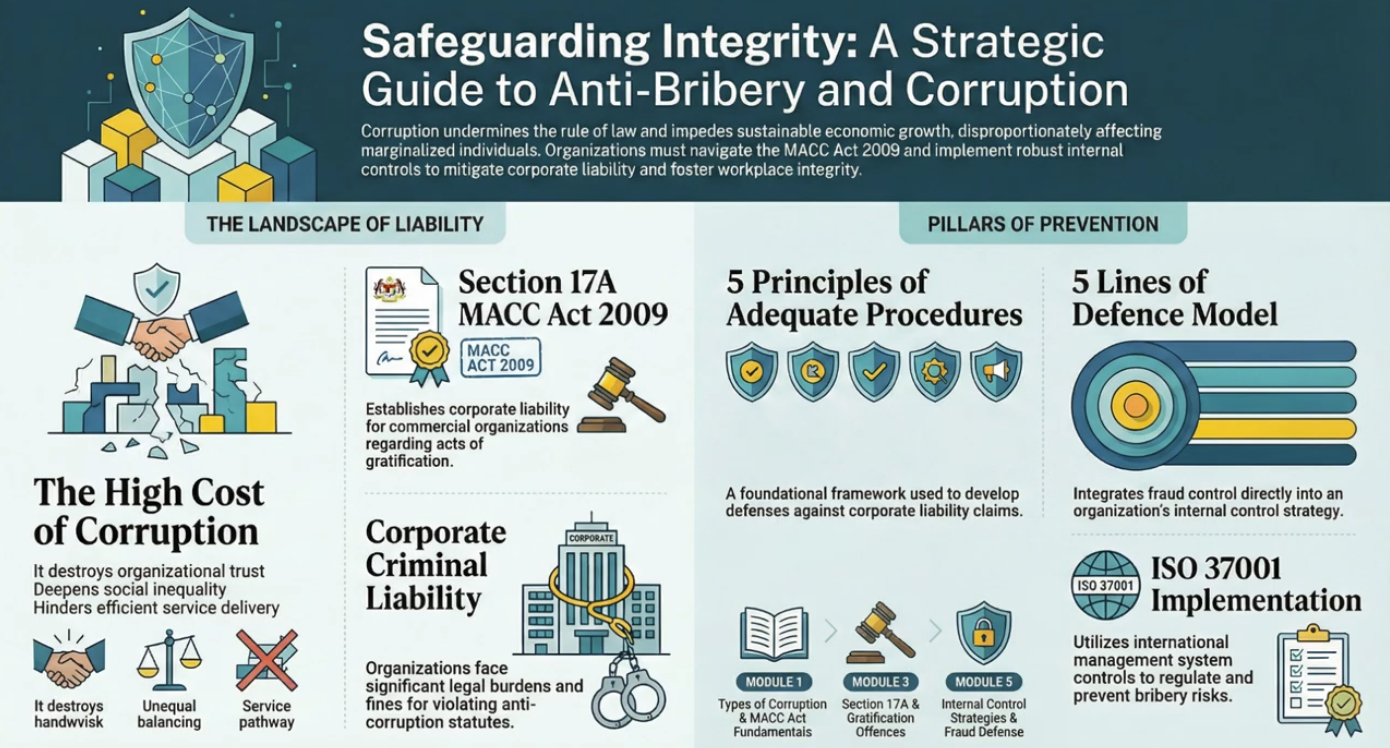
Anti-Bribery and Corruption
Interested in this programme?
Explore how this programme and its related resources can support your learning goals, organisational needs, or professional development.
- ✔ Comprehensive programme content
- ✔ Supporting articles and infographics
- ✔ Practitioner-led insights
- ✔ Suitable for multiple learning contexts
Or email us at training@hba.com.my